.png)
A Conversation with Dr. John Butler: The Power of Hypnotherapy
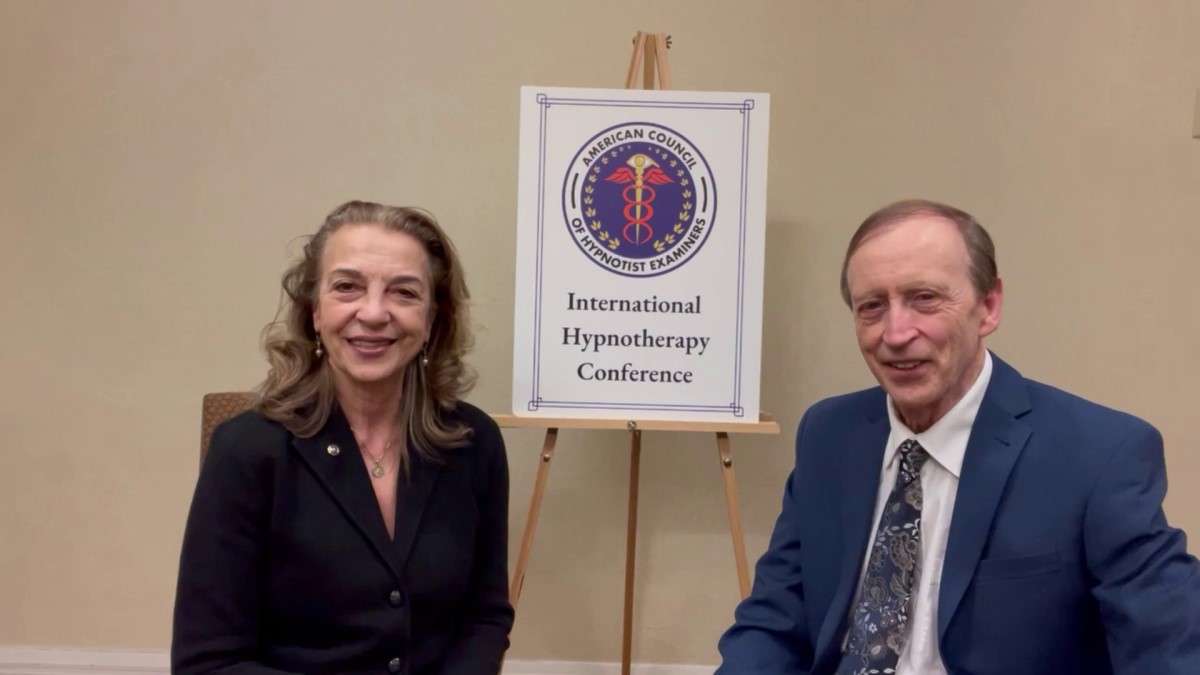
Liza Boubari sits down with Dr. John Butler, PhD — Executive Director of the American Council of Hypnotist Examiners (ACHE) and one of the most respected clinical hypnotherapists in the world. With over 40 years of experience as a practitioner and more than 30 years as an educator, Dr. Butler has worked with major corporations, military personnel, first responders, and health professionals across the US, Europe, and the Middle East. He taught the first official hypnotherapy training in the NHS at the Royal College of Nursing in London. In this conversation, Liza and Dr. Butler explore the depth and reach of hypnotherapy — from surgery without anesthesia to PTSD, corporate performance, and the very foundation of modern psychotherapy.
Liza: Dr. Butler, would you please introduce yourself and give us a brief history of your work?
I've been in the work — I'm thinking 42, 44 years professionally, and teaching for 34 years. I've used hypnotherapy in a wide variety of applications. A lot of them in mental health, quite a few in medical applications, chronic illnesses, and also in surgeries for people coping with very difficult procedures. Sometimes recovery is complicated, and sometimes people have problems with medications. If they can't have anesthesia, for example, we can use hypnosis to replace that — to use their own natural chemical anesthesia, which we all possess internally. We all have our own opiates, serotonin, adrenaline, and so on.
Liza: You yourself performed a hernia surgery in the UK — using only hypnosis — and it was filmed.
Yes, that's correct. I was offered a general anesthetic, as I was told I would need for this particular hernia — quite a severe one. And I said, I don't need that. I would just use hypnosis, which I did. It happened to be filmed because I had an opportunity with a very good cameraman who was available through different connections. I said to him, let's do this for educational purposes. It excites people's imagination — that you can do this for yourself, and that when you've learned to be a hypnotist, you can learn to do it to help other people.
From the data we have, hypnosis can dramatically cut down the risk of post-operative infections and speed up healing — especially for elderly patients where recovery from anesthesia may be complicated.
Liza: I do use self-hypnosis for my root canals — I've done eight of them with absolutely no anesthesia. But a hernia surgery means the surgeons, the hospital, everyone had to be on board?
Of course. It has to be legally and medically justified and agreed upon by hospital management and the lawyers. And this is just for the viewers — you cannot learn hypnosis one week and go do a surgery the next. It takes years of practice for self-hypnosis to reach that kind of depth. Training a person to do it, I usually take four or five sessions, at minimum, to make sure they're safe and we've tested it well.
Liza: Can you speak to the difference between meditation and hypnosis?
There's a great overlap between hypnosis and meditation — they're both tapping the inner mind. The difference is that hypnosis has an element of directiveness or intention. You're telling the subconscious: I want this to be numb, or I want this healing to happen. Meditation is more about going into a space of nothingness. Hypnosis is going deep within in order to resolve — to do something with what's there.
Liza: Tell us about ACHE — the American Council of Hypnotist Examiners.
It's a very important organization. A 501(c) nonprofit that exists to promote the profession and the interests of its members. It was founded in 1980 by Gil Boyne, right here in Glendale — and it's continued that work ever since. Through the schools ACHE approves, we know that a person is trained to a certain standard, and the organization then certifies those people as members. It's always been about standards — protecting the public in a genuine way, and protecting the profession itself.
The conference is one of the times practitioners can meet in person. It's a wonderful education event, as well as networking, renewing friendships, and making new ones. No matter how much we know, it's always fantastic to be refreshed — to learn a new technique, a new way of doing things. It's like reading the very best book again with a different brain each time.
Liza: Why would a corporation or the military bring in a hypnotherapist?
It often starts with individuals. A wife might be in a class I taught and say, "He needs to see you." He'd come, get benefit, and then ask, "Can we do this for our executives? Can we not use the word hypnosis?" And of course, we can call it something else — because their objection is primarily based on misunderstanding. The old Hollywood tropes. Taking over the mind, losing control. Once you get past that, the applications are vast.
For corporations: stress management, performance, helping people prepare for tough exams and high-stakes presentations. Self-esteem, confidence, and speaking ability play a huge role. For the military: attention, concentration, performing under stress, dealing with situations where anxiety comes into play. People with PTSD — soldiers who have flashbacks, depression, long-term anxiety from combat. The therapy is a marvelous method to help people master those problems that are left over from war.
And first responders — ER workers, police, fire — they go through and see a lot. It affects every nerve and every essence of who they are. What they witness leaves very deep impressions, and it changes their personalities in ways that are often very problematic. Helping people assimilate that, integrate it into their minds so they can move forward without being damaged or destroyed by it — that's such wonderful work.
Liza: How does hypnotherapy compare to cognitive therapy?
Hypnotherapy specializes in directly communicating with the subconscious mind. Cognitive therapy works more indirectly — using thoughts to target feelings, change feelings, generate feelings. Both have value, and a good hypnotherapist will incorporate elements of both. But the difference is that in hypnotherapy, you go directly to the subconscious. You're not telling your brain "I won't have pain" — because the subconscious may be saying, "Oh yes, you will." You have to speak to it directly.
Liza: You've said that hypnotherapy is the foundation of psychotherapy — not just a technique within it.
Yes. Historically, the work of Mesmer drew on ideas going back to the Middle Ages — the philosophy of magnetic energy, animal magnetism, the power of suggestion. That was taken up and evolved over time. Freud himself studied with Charcot, who was rooted in that tradition. Freud eventually moved away from hypnosis, but later in life came back to his own followers and said, "You need to use it."
Today, many, many people are using hypnosis or aspects of it — guided visualization, visualization-based therapies — often without calling it hypnosis. Because when you're working with the subconscious mind, you're working at the foundation of your being. That's why hypnotherapy has to be broad-based. It embraces all philosophy, all forms of psychology that pertain to the individual and their health.
Liza: Dr. Butler, what do you do for fun?
(laughing) I'm working. My work is a passion. It's where I get so much satisfaction — it's a natural high. I love good music. Folk music, classical, certain kinds of jazz. All the genres have good work in them.
Thank you, Dr. Butler — not only for spearheading ACHE after its founder, but for making hypnotherapy a true career and a profession. For more from Dr. John Butler, visit our YouTube channel. And if you have questions about hypnotherapy, I'm always here.
— Liza Boubari